
Who Is Lord Jagannath? History, Meaning & Spiritual Significance
Discover who Lord Jagannath is, His history, symbolism, connection with Krishna, Jagannath Temple, and the meaning of Rath Yatra in this complete guide.
NextGen Life Hub
7/12/20265 min read
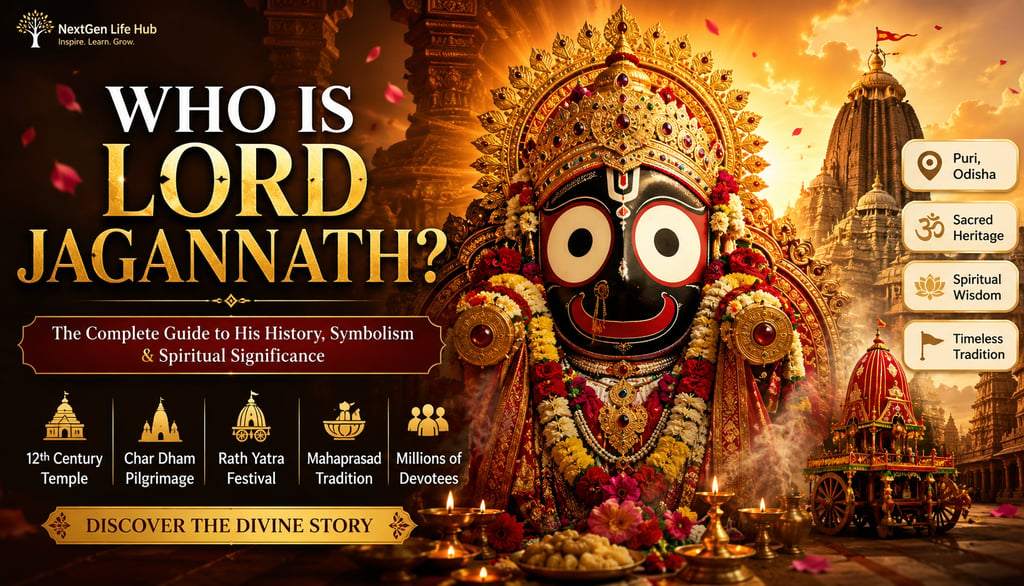
Who Is Lord Jagannath? The Complete Guide to His History, Meaning & Spiritual Significance
Have you ever wondered who is Lord Jagannath and why millions of devotees from around the world worship Him with such deep love and devotion? Lord Jagannath is one of the most revered deities in Hinduism and is widely worshipped as a divine form of Lord Krishna. From the sacred Jagannath Temple in Puri to the world-famous Rath Yatra festival, His influence extends far beyond religion, representing unity, compassion, and universal love.
In this complete guide, you'll discover the history, meaning, symbolism, temple traditions, and spiritual significance of Lord Jagannath in a simple, beginner-friendly way.
Who Is Lord Jagannath?
The name Jagannath comes from two Sanskrit words:
Jagat – Universe
Nath – Lord
Together, Jagannath means "Lord of the Universe."
In the Vaishnava tradition, Lord Jagannath is worshipped as a manifestation of Lord Krishna. Alongside Him are His elder brother Lord Balabhadra (Balarama) and younger sister Devi Subhadra. Together, they symbolize divine love, harmony, compassion, and the unity of all humanity.
Unlike most Hindu deities, Lord Jagannath has a unique appearance with large round eyes, a smiling face, and a simplified wooden form. This distinctive representation carries profound spiritual meaning rather than focusing on physical perfection.
The History of Lord Jagannath
The history of Lord Jagannath blends ancient tribal traditions, Hindu scriptures, and centuries of devotion.
Many historians believe that Jagannath worship originated from indigenous tribal traditions in Odisha before becoming closely associated with Lord Krishna through Vaishnavism. Over time, this unique tradition developed into one of India's most inclusive forms of worship.
The famous Jagannath Temple in Puri was built during the 12th century by King Anantavarman Chodaganga Deva. Today, it is one of the four sacred Char Dham pilgrimage sites and attracts millions of devotees every year.
According to devotional traditions, Lord Jagannath represents Krishna in a state of overwhelming divine love and compassion, remembering His eternal relationship with Radha and the people of Vrindavan.
Why Does Lord Jagannath Look Different?
One of the most fascinating aspects of Lord Jagannath is His extraordinary appearance.
Large Round Eyes
Lord Jagannath's large eyes symbolize:
Infinite compassion
Eternal awareness
Equal vision for all beings
Constant protection of devotees
His eyes remind us that the Divine watches over everyone without discrimination.
Wooden Idols
Unlike many Hindu temples where deities are carved from stone or metal, the idols of Lord Jagannath, Balabhadra, and Subhadra are made from sacred neem wood.
This reflects the spiritual teaching that physical forms are temporary, while the divine soul is eternal.
Every 12 to 19 years, the sacred Nabakalebara ceremony takes place, during which new wooden idols are created and the divine essence is ceremonially transferred to them.
Incomplete Hands and Feet
The unfinished appearance of Lord Jagannath is rich in symbolism.
Many devotees believe it represents:
God's limitless nature
Universal acceptance
Divine love beyond physical form
Spiritual perfection beyond human understanding
Jagannath Temple: The Heart of Devotion
Located in Puri, Odisha, the Jagannath Temple is one of India's holiest pilgrimage sites.
Built in the magnificent Kalinga style of architecture, the temple is famous for its towering spire, ancient rituals, and spiritual atmosphere.
Quick Facts About Jagannath Temple
Location: Puri, Odisha, India
Built: 12th Century CE
Main Deities: Lord Jagannath, Lord Balabhadra, and Devi Subhadra
Pilgrimage Status: One of the four sacred Char Dham pilgrimage sites in Hinduism
Famous Offering: Mahaprasad, the sacred food offered to the deities and shared among devotees
The Jagannath Temple is also renowned for having one of the largest temple kitchens in the world. Every day, thousands of devotees receive Mahaprasad, which is prepared using traditional methods in hundreds of earthen pots over wood-fired stoves. Sharing Mahaprasad symbolizes equality, devotion, and the spirit of community, making it one of the temple's most cherished traditions.
Why Is Rath Yatra Celebrated?
The Rath Yatra, also known as the Chariot Festival, is one of the world's largest and most spectacular religious celebrations.
During this festival, Lord Jagannath, Lord Balabhadra, and Devi Subhadra leave the temple and travel through the streets of Puri on beautifully decorated wooden chariots.
Millions of devotees gather to pull the massive chariots with ropes, believing it to be a sacred act of devotion.
Rath Yatra Symbolizes
God's love for everyone
Equality beyond caste and social status
The journey of the soul toward the Divine
Unity among all people
Today, Rath Yatra is celebrated in many countries, bringing together devotees from diverse cultures and backgrounds.
Spiritual Lessons from Lord Jagannath
Lord Jagannath's teachings remain relevant in modern life.
1. Equality
Everyone is welcome in the eyes of Lord Jagannath. His message rises above social divisions.
2. Devotion Over Rituals
Simple love and sincere faith matter more than elaborate ceremonies.
3. Acceptance of Change
The Nabakalebara tradition reminds us that bodies change, but the soul is eternal.
4. Compassion
Serving others with kindness and humility is one of the highest forms of worship.
5. Universal Love
As the Lord of the Universe, Jagannath teaches us to see divinity in every living being.
Amazing Facts About Lord Jagannath
Lord Jagannath is worshipped in a sacred wooden form.
The Jagannath Temple is over 800 years old.
Rath Yatra attracts millions of devotees every year.
Mahaprasad is shared equally among all devotees.
Nabakalebara is one of Hinduism's rarest religious ceremonies.
Lord Jagannath is worshipped worldwide through temples and cultural celebrations.
Practical Ways to Connect with Lord Jagannath
If you wish to deepen your spiritual journey, consider these simple practices:
Read the Bhagavad Gita regularly.
Learn about the life of Lord Krishna.
Chant the Hare Krishna Mahamantra.
Watch or participate in Rath Yatra.
Visit Jagannath Temple if possible.
Practice compassion and selfless service every day.
Share Mahaprasad or food with those in need.
Key Takeaways
Lord Jagannath means "Lord of the Universe."
He is widely worshipped as a form of Lord Krishna.
His large eyes symbolize compassion and universal awareness.
The Jagannath Temple in Puri is one of Hinduism's holiest pilgrimage sites.
Rath Yatra celebrates God's love for all humanity.
Jagannath's teachings inspire equality, devotion, humility, and compassion.
Conclusion
Understanding who is Lord Jagannath is about much more than learning the history of a famous Hindu deity. Lord Jagannath represents universal love, divine compassion, equality, and the eternal connection between God and humanity. His unique appearance reminds us that spiritual truth goes beyond external forms, while His festivals and temple traditions continue to unite millions of devotees across the world.
Whether you are a devotee, traveler, student, or spiritual seeker, the timeless wisdom of Lord Jagannath offers valuable lessons in kindness, devotion, humility, and unconditional love. His message remains as meaningful today as it has been for centuries.
Frequently Asked Questions (FAQs)
1. Who is Lord Jagannath in Hinduism?
Lord Jagannath is worshipped primarily as a form of Lord Krishna and is known as the Lord of the Universe.
2. Why does Lord Jagannath have big eyes?
His large eyes symbolize divine awareness, compassion, and His ability to watch over every living being equally.
3. Why are Jagannath idols made of wood?
The wooden idols represent the temporary nature of the physical world while preserving an ancient sacred tradition through the Nabakalebara ceremony.
4. Why is Rath Yatra celebrated?
Rath Yatra celebrates Lord Jagannath's annual journey outside the temple, symbolizing God's love and blessings for everyone.
5. Can non-Hindus visit Jagannath Temple?
Entry into the main temple is traditionally restricted to Hindus. However, everyone can witness the magnificent Rath Yatra festival and admire the temple from designated viewpoints nearby.
Stay Connected with Our Spiritual Community
📩 Subscribe to Our Newsletter
Receive authentic articles on Lord Jagannath, Hindu spirituality, temple traditions, Indian culture, and timeless wisdom—delivered straight to your inbox every week.
💬 Join the Conversation
What does Lord Jagannath mean to you? Have you visited the Jagannath Temple in Puri or experienced the Rath Yatra? Share your thoughts, experiences, or questions in the comments below. We'd love to hear from you.
🔄 Share This Article
If you found this guide helpful, please share it with your family and friends on Facebook, WhatsApp, X, LinkedIn, or Pinterest. Your support helps spread the timeless message of Lord Jagannath to more people around the world.
📚 Recommended Resources
Want to deepen your understanding of Lord Jagannath and Krishna philosophy? Explore these resources:
Beginner-friendly books on Lord Jagannath
The Bhagavad Gita (English, Hindi, Bengali & Odia editions)
Authentic devotional books and scriptures
Jagannath-inspired home décor, paintings, and idols
Puri Jagannath Temple travel guides and pilgrimage resources
Some links on this page may be affiliate links. If you purchase through them, we may earn a small commission at no extra cost to you. Thank you for supporting our work.
Connect
Stay updated with the latest AI insights.
Contact
📧 Email nextgenlifehub@gmail.com
© 2026 NextGen Life Hub. All rights reserved.
Legal